

kyoto
この記事は現在、英語版のみの公開です。
Why the Kyoto Railway Museum works for families
The Kyoto Railway Museum sits just one train stop from Kyoto Station, a two-minute walk from Umekoji-Kyotonishi Station on the JR Sagano Line. With 54 historic railway vehicles spread across a 30,000-square-metre site, it is one of Japan's three major railway museums and the most child-friendly major attraction in Kyoto.
Unlike many of Kyoto's temple and shrine visits, this museum is built around interaction. Children can climb into driver cabs, operate real training simulators, ride a steam locomotive and watch working trains pass on live tracks. The exhibits span the full arc of Japanese rail history, from century-old steam engines to sleek 500-series Shinkansen, and almost everything is designed to be touched, boarded or explored.
Most of the collection is indoors, which makes it a reliable choice in poor weather. The museum lends strollers free of charge while stocks last, and the second floor includes a dedicated Kids Park for younger children accompanied by an adult. Plan for two to three hours to see the main building and outdoor exhibits comfortably, or longer if your children want to queue for multiple simulator sessions.
[[image:1]]

What children actually enjoy here
The roundhouse and turntable near the entrance hold a dozen beautifully restored steam locomotives, many of which you can enter to see the driver's cab and coal tender. The turntable still rotates, and staff demonstrate it several times a day. Toddlers and preschoolers are usually happy simply climbing the steps and peering into the machinery; older children start to grasp the engineering.
Inside the main building, the ground floor displays full-size trains you can board, including an early Shinkansen and a 500-series bullet train with its famously sharp nose. The second floor holds a large model railway layout with an interior viewing tunnel that only children can enter, putting them at eye level with the miniature trains. The same floor has the driving simulators, a train control centre display and the Kids Park, a soft-play area with railway-themed toys for children who need a break from walking.
The third floor focuses on the mechanics of rail travel—how signals work, what keeps trains on schedule, how ATS and ATC safety systems prevent collisions—but it is presented through hands-on models and buttons rather than text panels. Children can operate model trains and watch them stop automatically when a signal changes, which makes abstract safety concepts concrete.
Outside, live JR tracks run along one edge of the museum, and a viewing platform lets you watch working commuter trains, freight services and occasional Shinkansen pass at full speed. The contrast between the static museum pieces and the live railway is striking, and train-obsessed children will often spend twenty minutes here without prompting.
[[image:2]]
The steam train ride and other hands-on experiences
The SL Steam is a working steam locomotive that pulls vintage passenger carriages on a one-kilometre loop around the museum grounds, passing through Umekoji Park. The round trip takes about ten minutes, and departures run roughly every half-hour during opening hours. Tickets cost 300 yen for adults and 100 yen for children; you buy them from machines at the steam locomotive platform when the museum opens, and they sell out quickly on weekends and school holidays.
The ride itself is gentle and short, but the experience of boarding a century-old carriage and hearing the steam whistle is memorable for younger children. Some of the locomotives in service are over a hundred years old, and the smell of coal smoke and the rhythm of the wheels are very different from modern trains.
The driving simulator is the most popular paid activity. You sit at a console identical to those used in actual driver training and operate a train along a real route, responding to signals and speed limits. Sessions last about ten minutes. You must buy tickets in advance online the night before your visit; the museum does not accept cash payment on the day, and slots fill quickly. The simulator is suitable for children who can reach the controls and follow instructions, generally from around age six upwards.
The track bicycle experience runs only on weekends and public holidays, between 10:00 and 16:30 with a break from 12:00 to 13:00. You ride a maintenance bicycle along a short section of track, two people per bike. It is first-come, first-served and does not require advance booking, but queues form quickly after opening.

Practical details for your visit
The museum opens at 10:00 and closes at 17:00, with last entry at 16:30. It is closed on Wednesdays and from 30 December to 1 January. When a Wednesday falls on a public holiday, the museum opens that day and closes the following day instead.
General admission is 1,500 yen for adults, 1,300 yen for university and high school students, 500 yen for elementary and junior high students, and 200 yen for children aged three and over. Infants under three enter free. Visitors with a disability certificate pay half price, and one companion receives the same discount. Advance tickets are available and recommended for busy periods; check the official site for current booking links.
The museum has no parking. Umekoji Park operates a small car park for disabled visitors, elderly guests and families with infants, but most visitors arrive by public transport. From Kyoto Station, take the JR Sagano Line one stop west to Umekoji-Kyotonishi Station; the journey takes about two minutes, and the museum is a two-minute walk from the station exit. On foot from Kyoto Station, the walk is about twenty minutes. City buses 205 and 208 stop at Umekoji-koen-mae, about five minutes' walk from the entrance.
You may eat and drink only in designated areas. The museum has a family-friendly cafeteria on the upper floor where you can buy snacks or a full meal. Alternatively, bring a packed lunch and plan a picnic in adjacent Umekoji Park after your visit. The park has open lawns, playgrounds and shade, and combines well with the museum for a half-day outing.
[[image:3]]
How a local nanny helps here
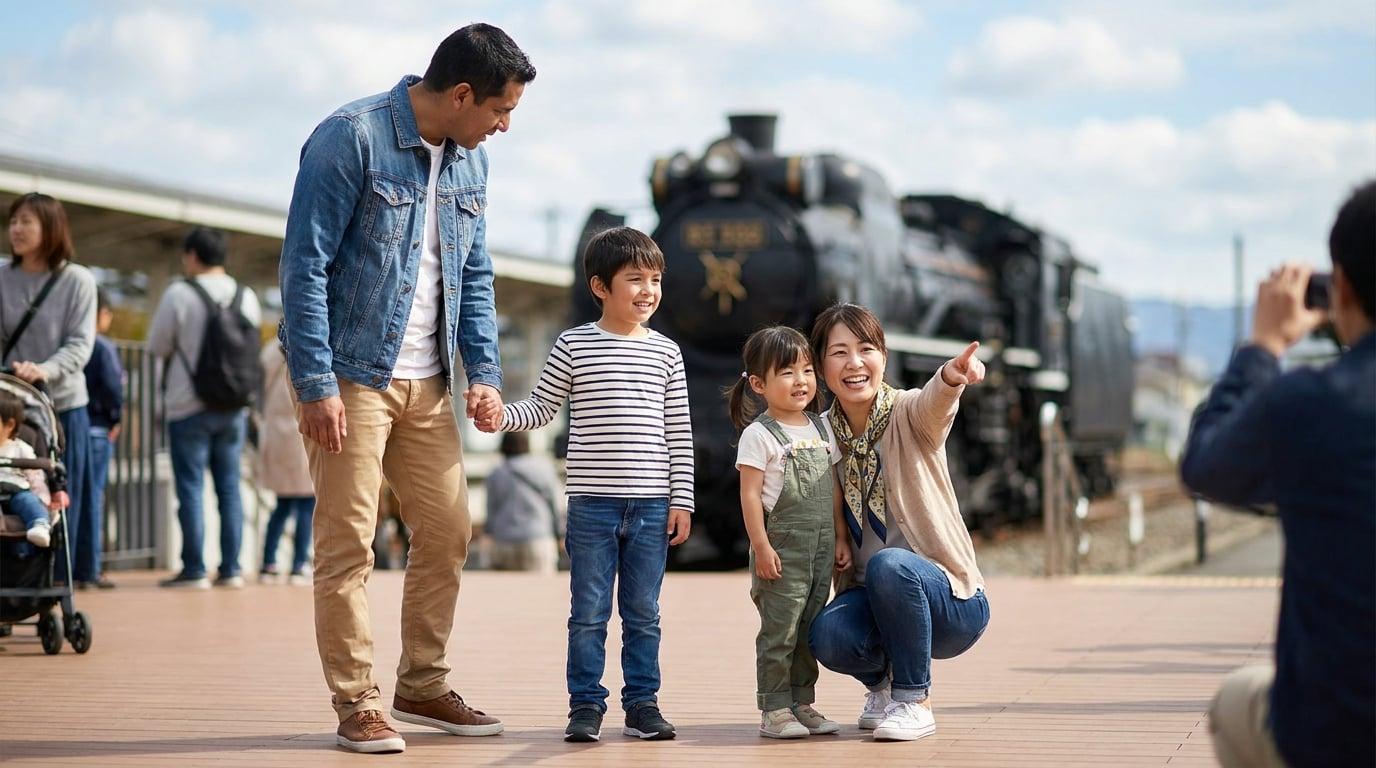
A museum visit with multiple children, especially when queues form for the simulator or steam train, benefits from an extra pair of hands. A local nanny from The Travel Nanny knows which exhibits hold toddlers' attention longest, can queue for steam train tickets while you explore the roundhouse with your children, and helps navigate the museum's three floors without meltdowns. She can also suggest a nearby lunch spot or a second activity in Umekoji Park that suits your children's ages and energy levels.

Before you go: quick checklist
- Book driving simulator tickets online the night before if your children want to try it
- Arrive at opening time if you want steam train tickets on a weekend or holiday
- Wear comfortable shoes; the museum is large and involves stairs between floors
- Bring snacks or plan to use the cafeteria; toddlers will need a break mid-visit
- Check the official site for current opening hours and any temporary closures
- Allow two to three hours minimum, longer if your children are keen train fans
- Combine with Umekoji Park for a picnic or outdoor play after the museum
- Strollers are available to borrow, but bring your own if you have a specific model your child needs