



hawaii
この記事は現在、英語版のみの公開です。
Pearl Harbor is one of those rare places where school-age children can stand inside history rather than just read about it. The sites are genuinely different from each other—some quiet and moving, others hands-on and exciting—and when you plan with your children's ages and energy in mind, the day becomes both educational and memorable.
This guide focuses on school-age children, roughly ages five to twelve, who are old enough to grasp the significance of what happened here and young enough to benefit from the interactive elements that bring the history to life.
Preparing Your Children Before You Go
A little preparation makes an enormous difference. School-age children respond well to Pearl Harbor when they arrive with context, not just curiosity. In the week before your visit, talk about what happened on 7 December 1941 in age-appropriate terms. Explain that Pearl Harbor is an active military base and a memorial where many people lost their lives, and that some parts of the visit will be quiet and reflective.
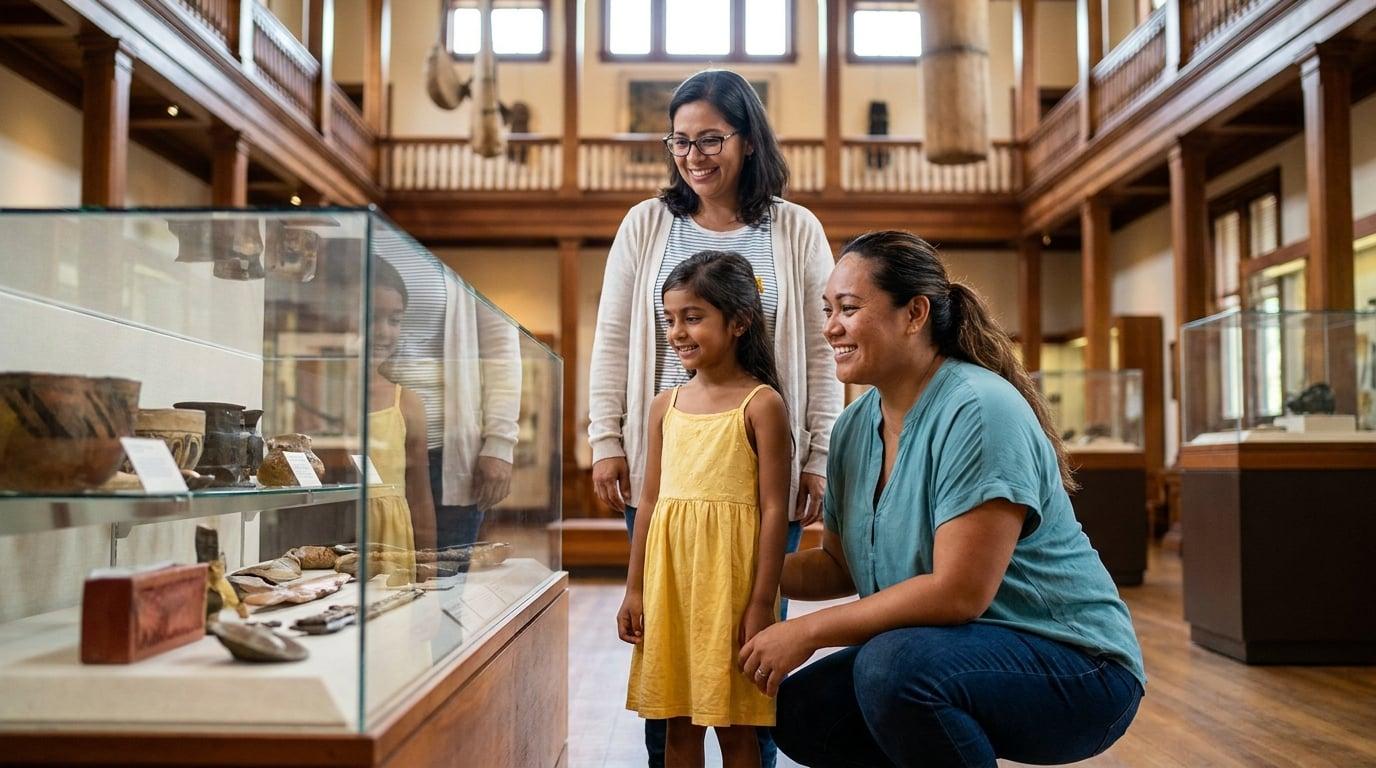
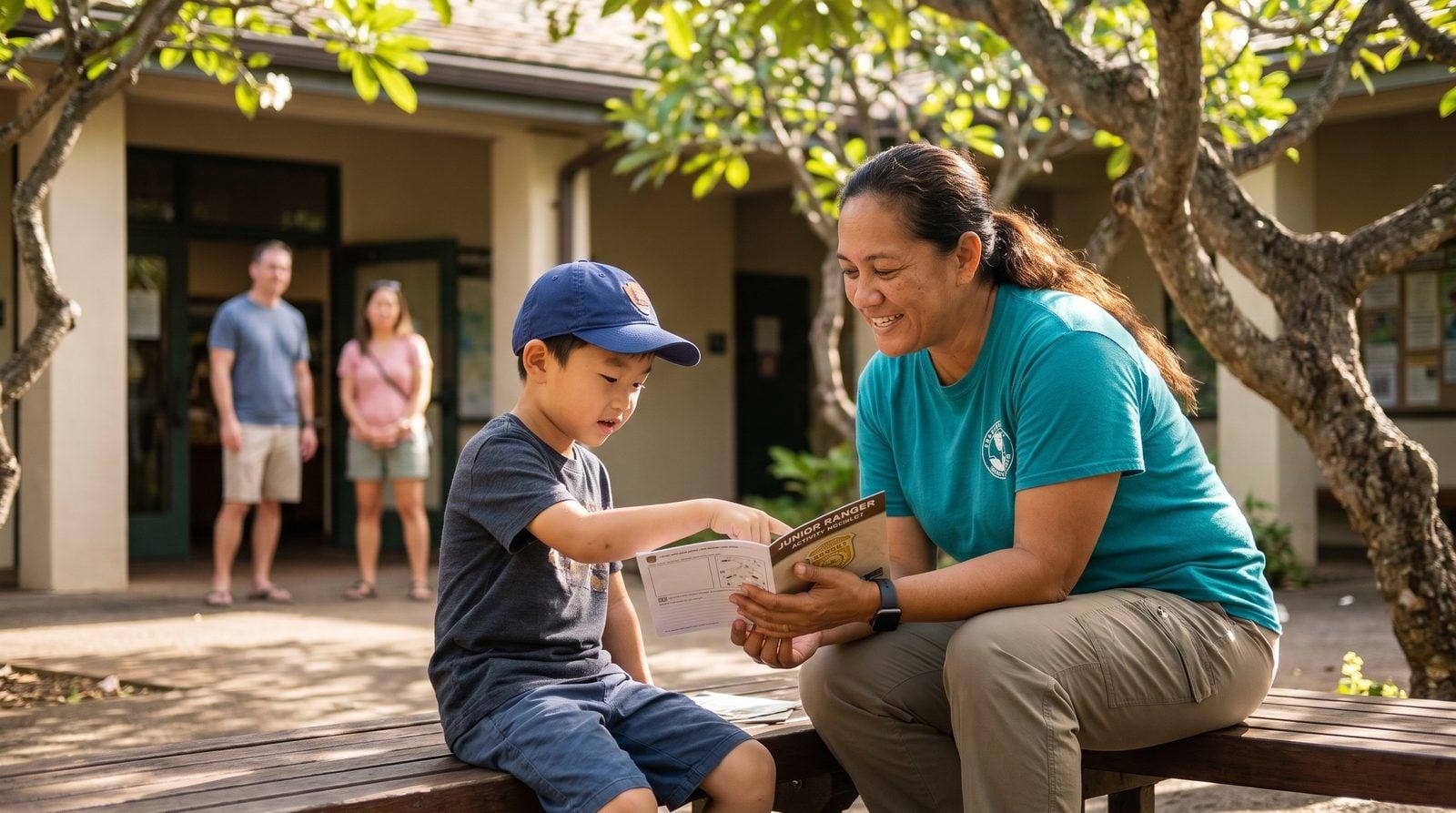
Download the Junior Ranger Scavenger Hunt for ages seven to twelve or the Keiki Ranger Activity Book for ages three to six from the National Park Service website before you leave home. These are Visitor Centre activities, so your child will complete them during the visit. Finishing either one earns an official Junior Ranger badge from the ranger at the information desk, and children take this seriously. The scavenger hunt turns waiting time into learning time and gives children a tangible goal.
Talk about what a memorial is and why people visit with respect. Explain that the USS Arizona Memorial sits above a ship where sailors remain, and that visitors are asked to be quiet. Children who understand this in advance respond with genuine thoughtfulness.
Arriving Early and Navigating the Visitor Centre
With school-age children, early arrival is not optional. Plan to reach the Pearl Harbor Visitor Centre by half past seven in the morning. This timing means shorter queues, calmer grounds and a better chance of securing standby tickets if you were unable to book the USS Arizona Memorial programme in advance.
The Visitor Centre opens at seven o'clock. Security is airport-style, and bags must be clear. Pack snacks, sunscreen and any essentials in clear bags or cargo pockets. If you bring items that are not permitted, the storage facility near the entrance charges seven to ten dollars.
Once through security, head to the information desk to pick up the Junior Ranger materials if you have not already printed them. Then make your way to the USS Arizona Memorial programme queue. There are no restrooms between the Visitor Centre and the memorial itself, so take everyone to the facilities before you join the line.
If you have a reserved ticket, you will enter at your designated time. If you are on standby, sign up on the tablet at the Visitor Centre when you arrive. You will receive a text message when you are able to board the next boat. The standby system works well, but it requires flexibility.
[[image:1]]
The USS Arizona Memorial Programme
This is the most important stop of the day, and it works best when children arrive knowing what they are about to see. The programme begins with a twenty-three-minute documentary that uses actual footage from the attack, newsreels and survivor recollections. The film is powerful and, for younger school-age children, can be intense. The screen is large, the explosions are loud and the subject matter is serious. Most children aged seven and older manage well. Younger children may prefer to sit in a parent's lap and cover their ears during the loudest moments. The theatre is fully darkened.
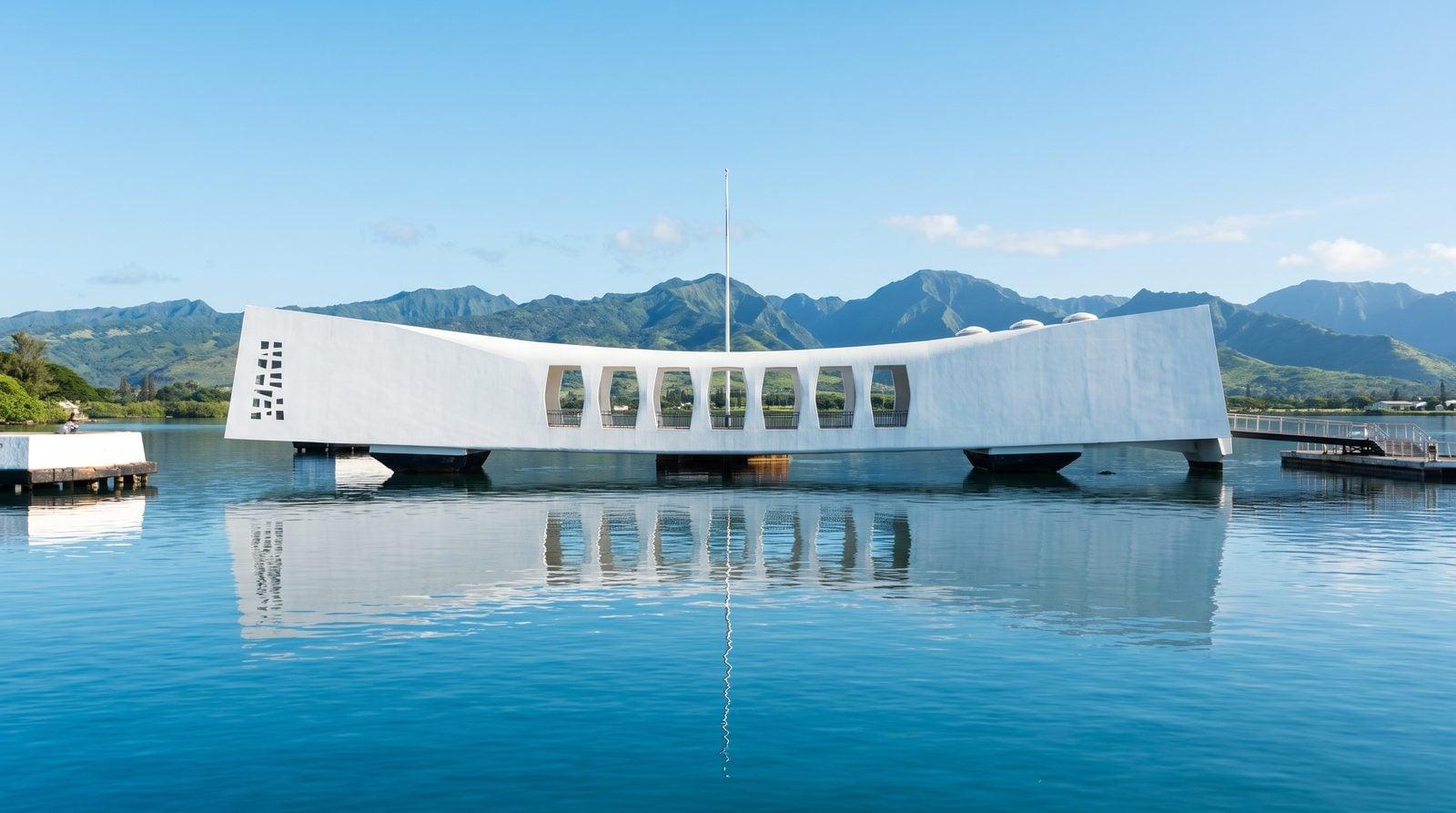
After the film, you board a Navy boat and cross the harbour to the memorial itself. The crossing takes a few minutes, and then you step onto the structure that spans the sunken hull of the USS Arizona. For older children especially, this is a moment they remember for the rest of their lives. You can see the ship beneath the water, and you can see oil still rising to the surface more than eighty years later. The memorial is quiet, and visitors speak in low voices or not at all. Children respond to this atmosphere when they have been prepared for it.
Strollers cannot board the boat, so plan accordingly. The entire programme, from documentary to return boat, takes about forty-five minutes.
The Pacific Fleet Submarine Museum and USS Bowfin
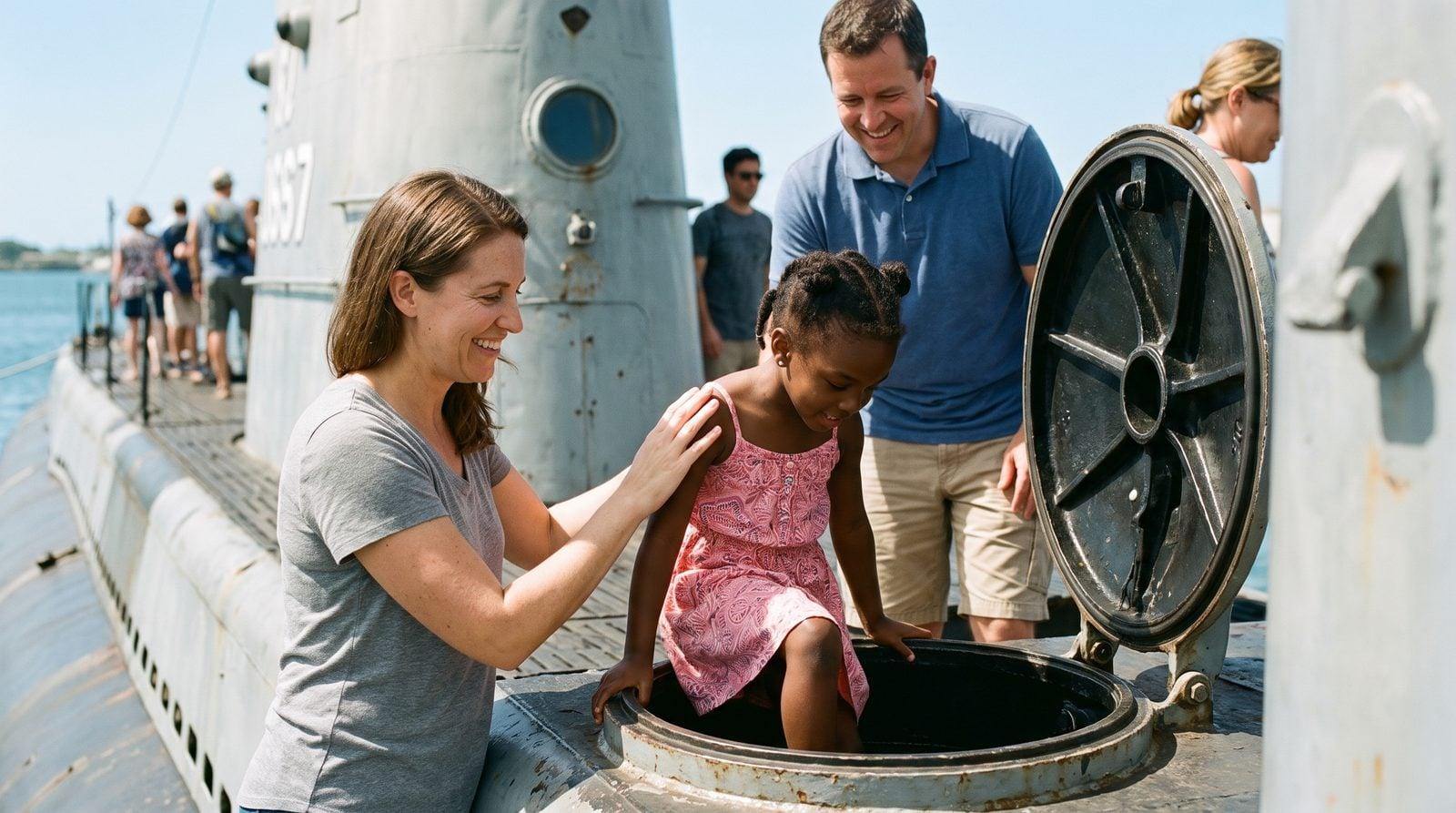
After the reflective experience at the USS Arizona Memorial, the energy usually shifts completely at the USS Bowfin. The Pacific Fleet Submarine Museum is right next to the Visitor Centre—just walk over—and the contrast is immediate. Children who were quiet and thoughtful at the memorial are suddenly climbing through hatches and asking a hundred questions.
The USS Bowfin is a real Second World War submarine that you board and explore from bow to stern. She made nine war patrols, sank forty-four enemy ships and earned the nickname the Pearl Harbor Avenger. Moving through the torpedo room, the crew quarters and the cramped control room gives school-age children a physical, tactile sense of history that no exhibit can replicate. The audio tour is included and available in seven languages.
There are steep stairs and low doorways, and children need to be comfortable climbing and ducking. The experience is hands-on and memorable. Budget about seventy-five minutes. Children under four are not allowed on the submarine for safety reasons, but they are welcome in the museum building and the outdoor exhibits.
[[image:2]]
Battleship Missouri Memorial
The Battleship Missouri Memorial sits on Ford Island, which you reach by free shuttle bus from the Visitor Centre. At 887 feet long, the Missouri is enormous in a way that makes children stop and stare. She is the last battleship the US Navy ever built, and she served across three wars. The guided tour, available in English, Japanese, Chinese and Korean, walks you through her history and brings you to the surrender deck where the Second World War officially ended on 2 September 1945.
For school-age children, the Battleship Missouri Memorial offers Chuck's Quest, an interactive scavenger hunt designed for ages four to twelve. The self-guided adventure turns your tour into a mission led by Chuck the Iguana. You purchase the quest experience at the ticket window when you arrive, and it takes about an hour to complete. Children enjoy this, and it keeps them engaged throughout the ship.
The Missouri is fully accessible, though the decks involve stairs and walking. Plan for about an hour to ninety minutes.
How a Local Nanny Helps Here
Pearl Harbor is a full day, and school-age children have limits. A local nanny from The Travel Nanny can make the difference between a day that ends in exhaustion and one that ends in excitement. Your nanny knows when to suggest a snack break, how to pace the visit so younger siblings stay engaged and when to step in with a quiet distraction during the more intense moments. If you have children of different ages, a nanny helps you tailor the day so everyone gets what they need—whether that is extra time at the aviation museum or a slower pace at the memorial.
Pearl Harbor Aviation Museum
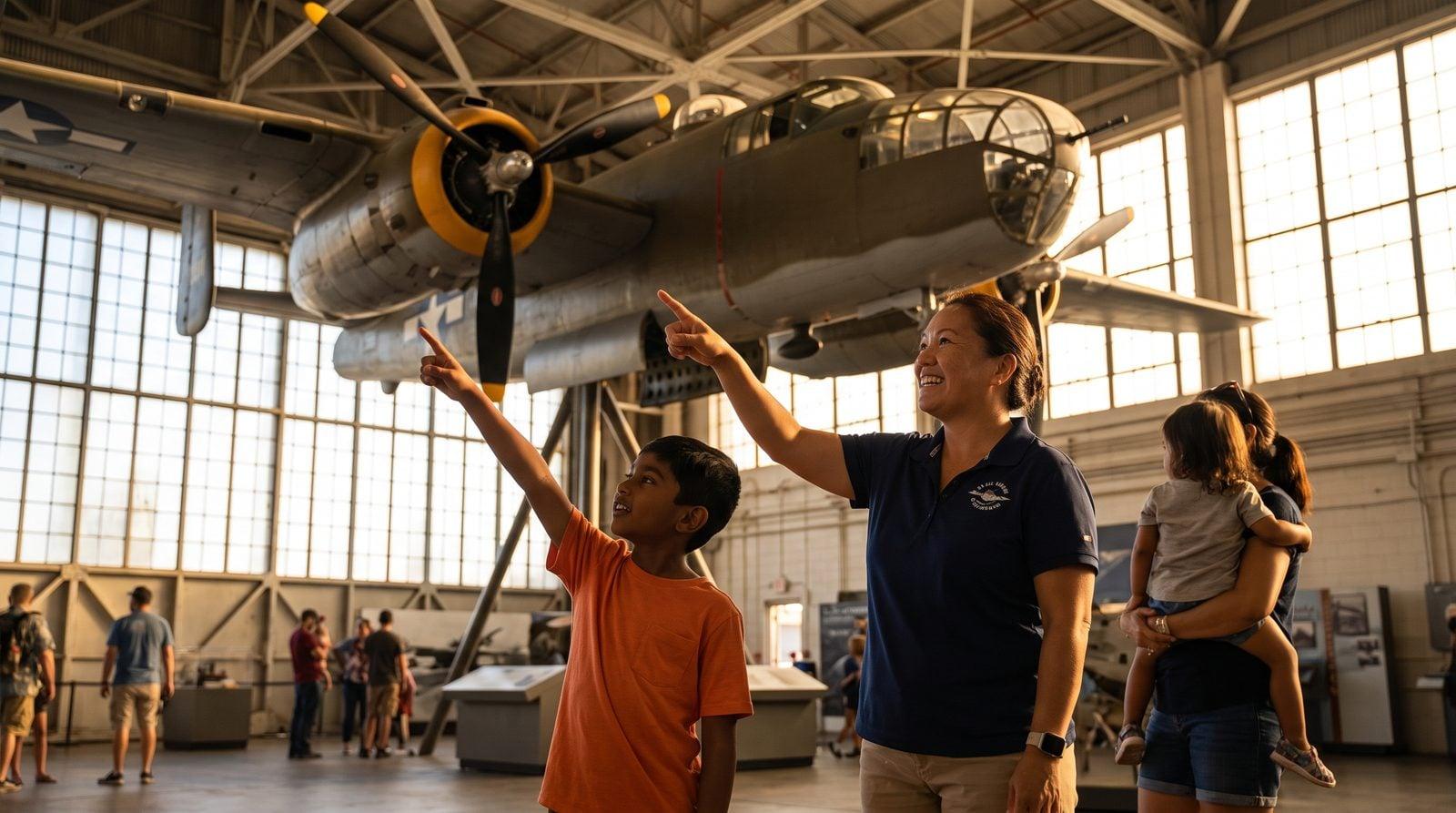
The Pearl Harbor Aviation Museum is the most interactive stop of the day and purpose-built for children. You are inside the original Second World War hangars that were attacked on 7 December 1941—bullet holes still visible in the windows—surrounded by more than fifty aircraft. The Fighter Ace flight simulators put children in the cockpit of a Second World War fighter plane, and the Tower View Experience takes you 168 feet up into the Ford Island Control Tower for a view of the entire harbour and battlefield.
The museum is fully wheelchair accessible and the most stroller-friendly stop on Ford Island. The Hangar Café is air-conditioned and open from eleven o'clock to four o'clock, a welcome break if you need it. Budget ninety minutes.
School-age children respond especially well to the aviation museum because it balances information with interaction. They can see both American and Japanese planes, learn about the attack and later stages of the Pacific War, and try the simulators. The introductory film covers similar material to the USS Arizona documentary but on a smaller screen, which makes it less intense.
[[image:3]]
Practical Details and What to Bring
Pearl Harbor is outdoors, exposed and often hot. Wear sunscreen and hats. Closed-toe shoes are strongly recommended—there is a lot of walking and some uneven surfaces on the ships. Bring water bottles and snacks in clear bags. The Visitor Centre has a café, but queues can be long during busy periods.
Book your USS Arizona Memorial reservation on the official National Park Service recreation website first, ideally at least a week in advance. Everything else builds around that time slot. If you are unable to secure a timed reservation, the standby option is a reliable alternative.
Children aged one and older need their own ticket for the USS Arizona Memorial boat programme, even if they sit on a parent's lap. Tickets are free, but the processing fee is one dollar per ticket.
The sites are spread out, and you will walk a fair distance. If you have a child who tires easily, plan for breaks. The shuttle buses between the Visitor Centre and Ford Island run frequently, and the aviation museum is a good place to rest in air conditioning.
Closing Checklist
- Download Junior Ranger materials from the NPS website before your visit
- Book USS Arizona Memorial tickets on the recreation website at least one week ahead
- Arrive at the Visitor Centre by 7:30am
- Pack snacks, sunscreen and essentials in clear bags only
- Prepare children for the reflective tone of the USS Arizona Memorial
- Budget 45 minutes for the USS Arizona programme, 75 minutes for the USS Bowfin, 60 to 90 minutes for the Battleship Missouri and 90 minutes for the aviation museum
- Wear closed-toe shoes, hats and sunscreen
- Bring water bottles—Hawaii sun is strong and you will be outdoors much of the day
- Remember: children under 4 cannot board the USS Bowfin submarine
- Strollers are welcome at the Visitor Centre but cannot board the USS Arizona Memorial boat
- Collect Junior Ranger badges at the Visitor Centre information desk before you leave