



hawaii
本文目前仅提供英文版。
The Honolulu Zoo sits at the Diamond Head end of Waikiki, tucked into the western edge of Kapiolani Park, and it is one of the simplest family mornings you can plan on Oahu. You can walk over from most Waikiki hotels, pass under the banyans along Kalakaua Avenue, and be watching a Komodo dragon or a giraffe before the day gets hot. No rental car required, no complicated logistics, and the whole visit works at a toddler's pace.
The zoo spreads across 42 acres and is home to more than 1,200 animals, but that compact size is a feature. You can see the whole place in two to three hours, which is about the limit for young children in the sun anyway. The layout is straightforward, the paths are paved and stroller-friendly, and there is enough shade and open grass to take breaks when someone needs to sit down or run around.
What makes this spot particularly useful for families is that the zoo and Kapiolani Park sit side by side, so you can combine both into one relaxed morning or afternoon. The park itself is 300 acres of open green space with walking paths, playgrounds, and calm spots under the trees, all with Diamond Head rising in the background. It is a rare part of Waikiki where children can move freely and parents can actually pause.
Getting there and parking
The zoo sits at the corner of Kapahulu and Kalakaua Avenues, right where Waikiki meets the park. From most Waikiki hotels it is a flat ten to twenty minute walk, under a mile, and the stroll down Kalakaua past Kuhio Beach is pleasant. Biki stations are scattered throughout Waikiki if you prefer to cycle, and TheBus runs along Kuhio Avenue a block over. The Waikiki Trolley Green Line stops nearby as well, so you have options without a car.
If you do drive, the zoo parking lot entrance is on Kapahulu Avenue. It costs one dollar fifty per hour with a four hour maximum, paid at the machines by card or cash. The lot fills on weekends and holidays. A common alternative is the Waikiki Shell lot directly across Monsarrat Avenue, where parking is free. There is also more free and metered parking scattered around Kapiolani Park if you are willing to walk a few minutes. The zoo address is 151 Kapahulu Avenue.
[[image:1]]
Opening hours and tickets
The zoo is open daily from ten in the morning until three in the afternoon for entry, and the grounds clear out by four. It closes only on Christmas Day. That ten o'clock opening is later than many visitors expect, so do not arrive at eight and stand around at the gate.
Admission is twenty one dollars for adults aged thirteen and older and thirteen dollars for children aged three to twelve. Keiki under two get in free. If you live in Hawaii, the kamaaina rate is ten dollars for adults and six dollars for children, with a Hawaii ID at the gate. Active United States military and their dependents get that same lower rate with a valid ID. Those local and military prices are handled in person, so bring the card. No reservations are required, but the line at the entrance can get long on weekends, so arriving early in the opening window helps.
Check the official site for any changes to opening hours or admission prices before you go.
What to see at the zoo
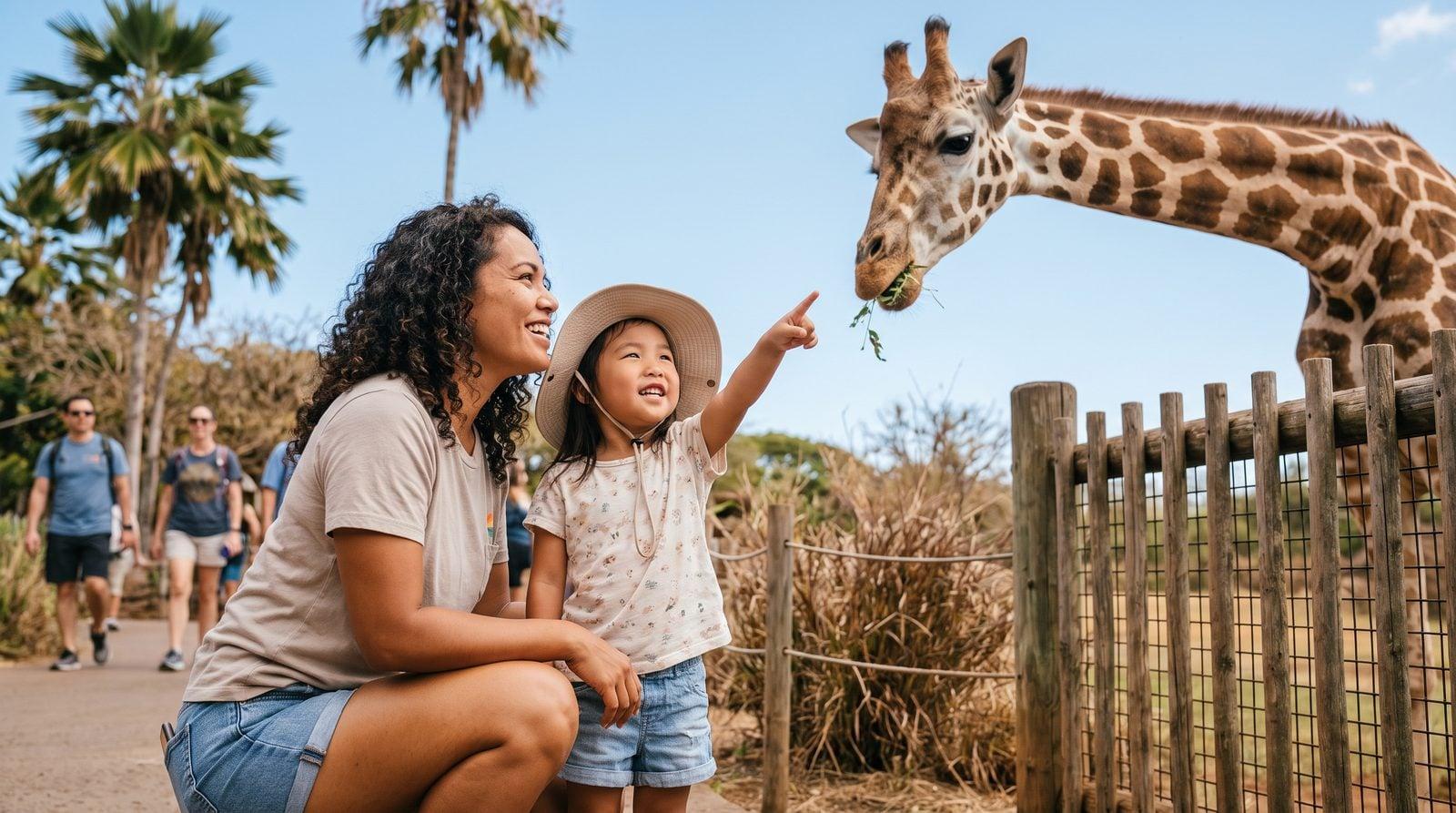
The zoo is laid out in loose zones, and you can wander them in any order. The largest is the African Savanna, and it is the showstopper. This is where you find the lions, the giraffes browsing at eye level, zebras, a rhino, hippos, and the African elephants that have been a Honolulu fixture for generations. Give this section the most time, because it is where the big, child pleasing animals live. Mornings tend to be better when animals are more active, especially before the midday heat.
The tropical forest and primate sections in the middle of the zoo are home to orangutans, birds, and reptiles including the Komodo dragon. The paths here are shaded, which makes them a good place to slow down when the sun is high. There is also a focus on local species. The nene, Hawaii's state bird, is one of those details people do not always expect to find here, and it is a useful teaching moment for keiki learning about the islands.
Do not skip the Keiki Zoo near the back. It is built for small children, with farm animals they can get close to, a splash area to cool off, and enough open space to let a wound up toddler run. Flamingos, tropical birds, and a lily pond round things out. If your crew is little, you may spend half your visit right here, and that is completely fine. That is the whole point of the place.
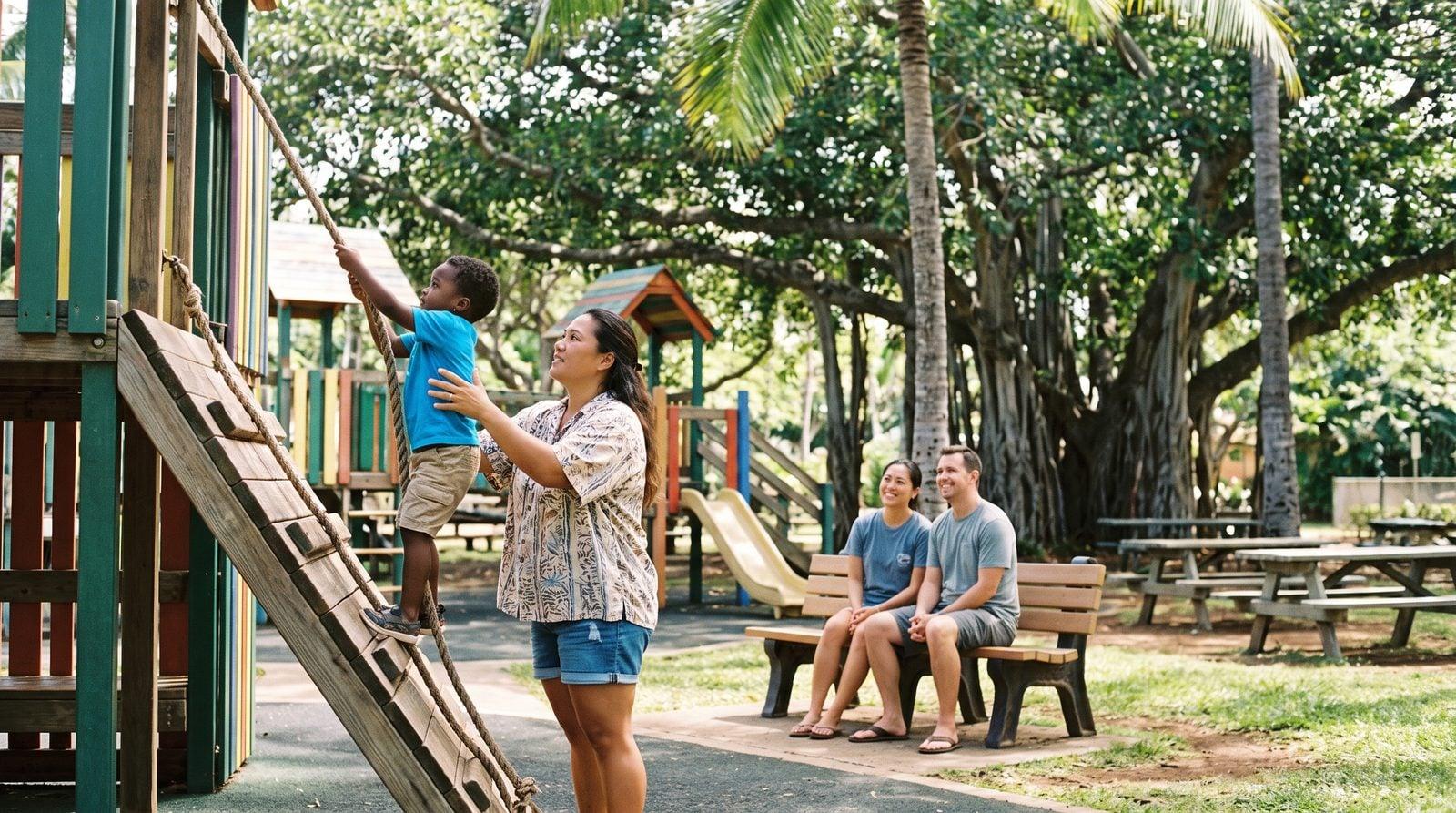
In the middle of the zoo there is a playground area with slides, swings, and ropes to climb. There are picnic benches and plenty of shaded grass for parents to sit down on, and you can enjoy a picnic lunch out there too. It is a legitimate draw on its own, and a rare spot in Waikiki where kids can run free and parents can actually rest.
[[image:2]]
Kapiolani Park and the surrounding area
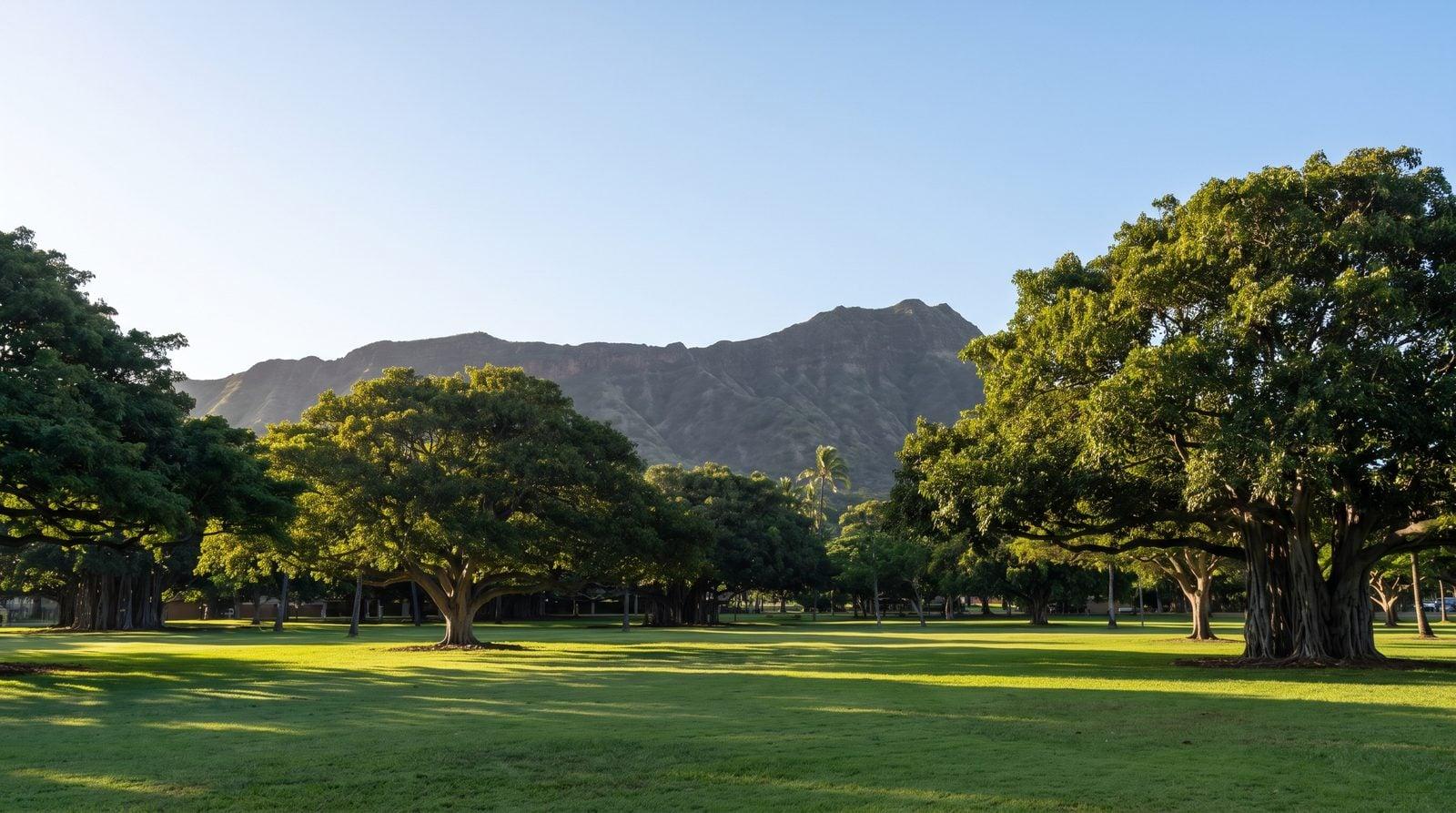
Kapiolani Park stretches out next to the zoo, and it is Hawaii's first public park. It is 300 acres of open green space with walking paths, shaded spots under old trees, and the 762-foot profile of Diamond Head rising in the background. The park is named after Queen Kapiolani, and it has been a gathering place for families since the late 1800s.
The park includes the Waikiki Shell, an outdoor concert venue where events and performances sometimes take place, and the Bandstand, a historic structure near the centre of the park. Queen Kapiolani Garden adds a quieter setting, with views toward Diamond Head and a more relaxed atmosphere. The whole area feels less crowded than most of Waikiki, and it is a good place to let children run on the grass or ride bikes on the paths.
Walk two minutes toward the water from the zoo and you reach the Waikiki Aquarium and the calm swimming at Kuhio and Queens Beach, some of the gentlest water for families on the south shore. Those same protected pockets are where beginners learn to surf when the summer swell is up. The combination of zoo, park, aquarium and beach all within walking distance makes this corner of Waikiki particularly useful for families with young children who need variety and space to move.
How a local nanny helps here
A local nanny can meet you at the zoo entrance and guide you through the layout at your family's pace, pointing out which animals are most active in the morning and where the shaded benches are when someone needs a break. They know which sections work best for different ages, where the splash area and playground are in the Keiki Zoo, and how to time your visit so you finish before the midday heat. After the zoo, they can walk with you through Kapiolani Park to the playground or the beach, or help you set up a picnic on the grass under the trees. It turns a simple morning into a relaxed, well-paced day without the guesswork.
[[image:3]]
Planning your visit
Plan on two to three hours for a family visit, less if your children are very small and fade early. A simple loop works best. Start at the African Savanna while everyone is fresh and the animals are moving, cut through the tropical forest and primates in the middle, then swing by the reptiles. Finish at the Keiki Zoo so the children can burn off whatever energy is left in the splash area and playground before you head out.
Strollers roll fine on the paved paths, and there are shady benches and lawn all through the grounds when someone needs a break. Move at their pace, not yours, and the whole thing stays fun. Bring water and sunscreen, and put a hat on everyone, because the shade is good but not total. There are water fountains for refills near each restroom. Strollers and wheelchairs are available for rent at the zoo if you are travelling light.
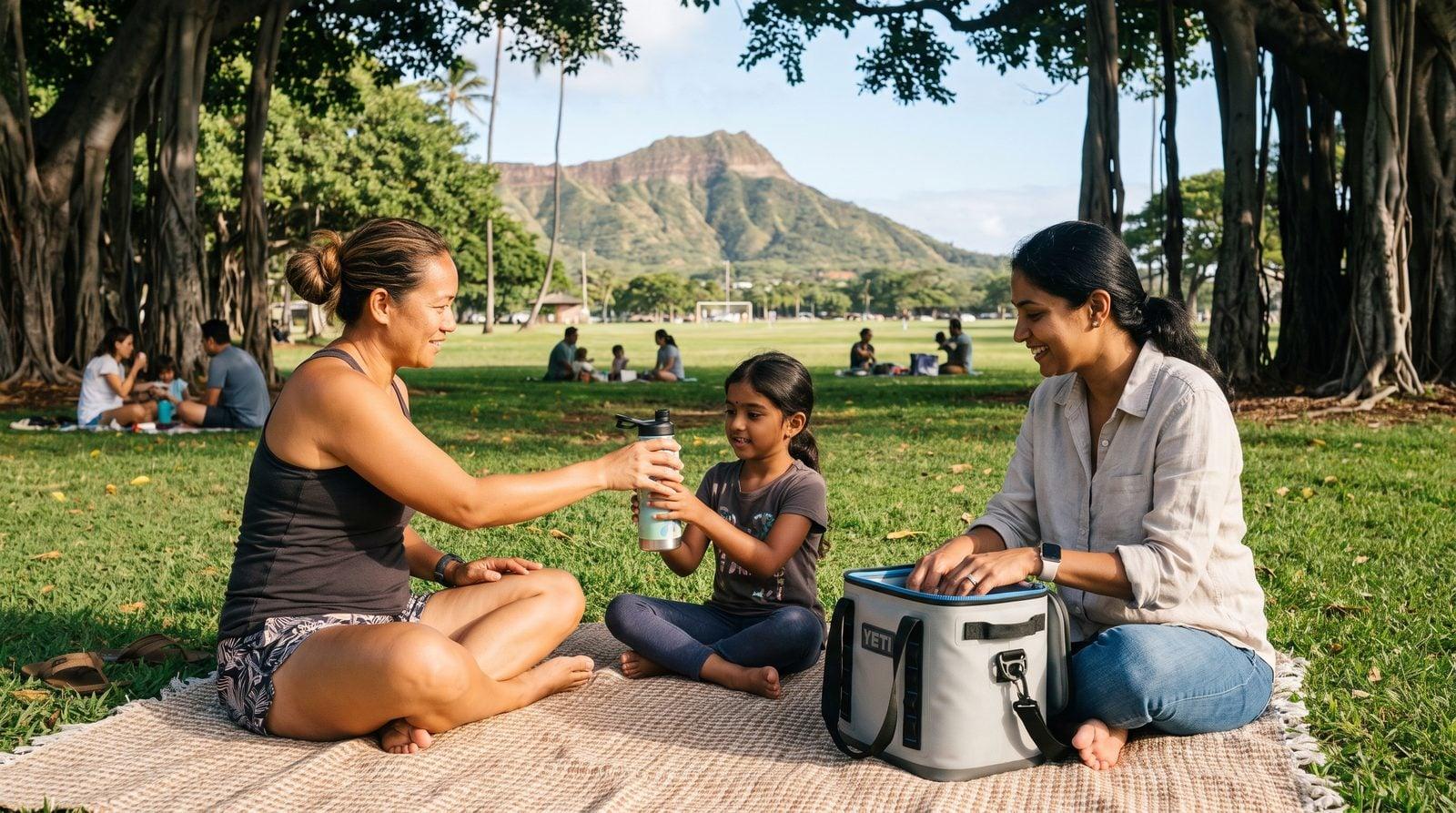
Restrooms and a snack stand are on site, though you are welcome to bring your own food and picnic on the grass, which is what many families do. If you are combining the zoo with Kapiolani Park, pack a blanket and some snacks and plan to spend the whole morning outside.
Before you go checklist
- Zoo opens at ten in the morning, not earlier
- Bring sunscreen, hats and refillable water bottles
- Strollers are welcome and helpful on the paved paths
- Pack snacks or a picnic lunch to eat on the grass
- Check the official site for any changes to hours or admission prices
- Arrive early on weekends to avoid the entrance line
- Combine the zoo with Kapiolani Park and the beach for a full morning
- Free parking is available at the Waikiki Shell lot across Monsarrat Avenue
- Plan two to three hours for the full zoo visit
- Finish at the Keiki Zoo playground so children can run before you leave