



hawaii
本文目前仅提供英文版。
Why the First Hours Matter More Than You Think
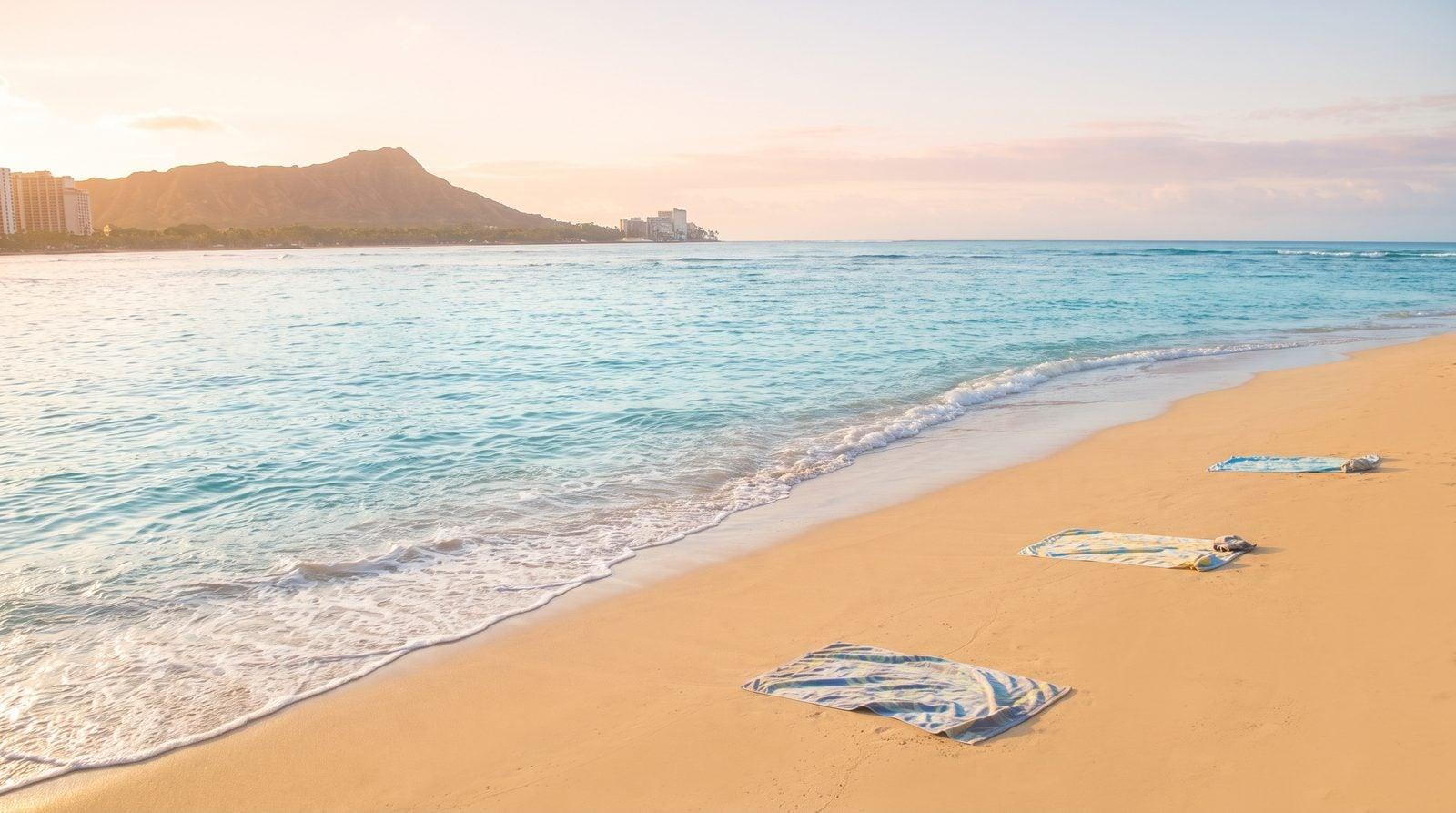
The difference between a good Waikīkī beach morning with a toddler and a difficult one often comes down to arrival time. Families who reach the sand before 9am consistently report calmer water, softer light, open stretches for towels and the kind of gentle rhythm that lets everyone leave happy. Mornings work best because the beach is less crowded, the sun is softer and everyone still has energy.
By mid-morning, the same beach feels louder, tighter and far less forgiving. Shade disappears, the sand heats up, crowds thicken and toddlers lose patience. The water itself can feel different — not necessarily rougher, but busier, with more bodies in the shallows and less room to hover within arm's reach. A manageable entry point at 8:15am can feel louder and far less patient by late morning.
This is not about being precious or over-cautious. It is about choosing the part of the day when the beach still feels like it is working with you rather than against you. Early mornings give you margin — time to watch the water, test the mood, try a few false starts and leave before the outing starts to drag. That margin is what makes the difference between a beach session that becomes a good memory and one that ends in tears.
Which Part of Waikīkī Works Best for Cautious Toddlers
Not all stretches of Waikīkī shoreline feel the same to a hesitant two-year-old. Some areas have gentler wave action at the tideline, shallower entries and a calmer emotional feel that makes first ocean experiences easier.
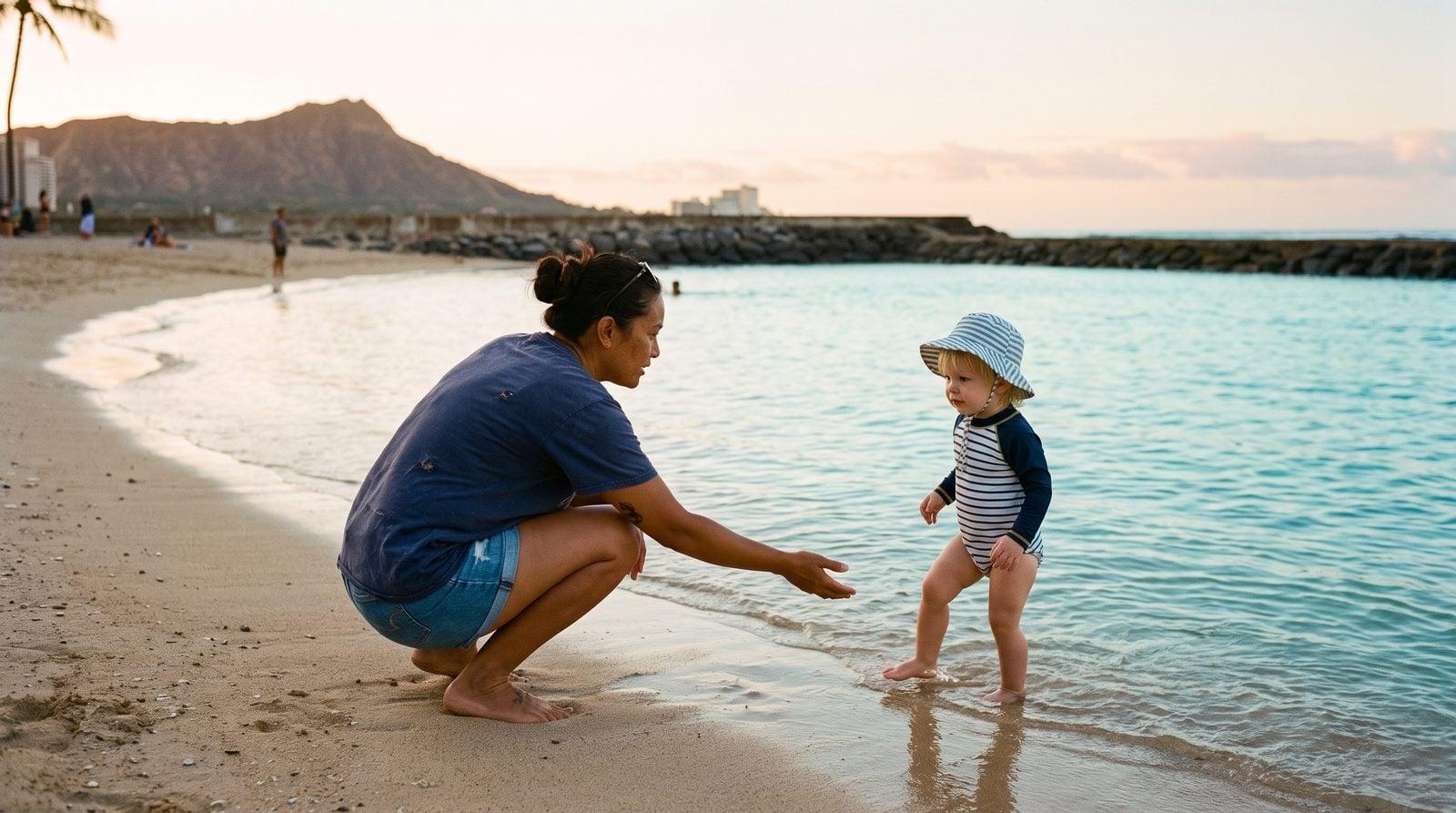
Kūhiō Beach is often the strongest first choice for families with cautious toddlers. The calm swimming enclosure created by concrete walls changes the emotional feel of entry. The water often feels more contained, the wave action less pushy and parents can make smaller decisions. You are not deciding whether to "do the beach" — you are deciding whether your toddler wants to stand in a shallow wash, shuffle a few steps farther or sit back down and try again in five minutes. That incremental approach is harder on more exposed stretches, where each retreat feels like backing out of something larger.
Kūhiō also works well because you can stage the whole experience in short loops: walk to the edge, let your toddler feel one wave, step back, reset and try again. The enclosure makes that pattern feel natural rather than like repeated failure.
The Duke's Beach and Hilton side is a strong second option, particularly for families who want more open water but still need a backup plan. Duke's Beach is popular with families thanks to a protective sea wall and a nearby manmade lagoon. That combination gives you flexibility — if the ocean edge feels workable, you stay with ocean play; if your toddler recoils from the motion, you are already close to a calmer environment rather than needing a full reset somewhere else.
Both areas are lifeguarded. Waikiki Dukes, Waikiki Kuhio and Waikiki Queens all have monitored lifeguard stations, giving families several South Shore options. Look for the lifeguard tower before you unpack too much, and if you do not see a lifeguard on duty or you are too far from the tower to feel supported, move before your toddler gets into trouble.
[[image:1]]
How to Read the Water Before Your Toddler Gets In
The beach will usually tell you more in three minutes of observation than in ten minutes of online reading. Before your toddler's toes touch the water, watch the shoreline for at least a few minutes. You are not just checking whether the water looks pretty — you are checking whether each incoming wave arrives gently or knocks children backward, whether the water drains out forcefully enough to twist ankles and whether other parents with small kids look relaxed or tense.
Ocean safety guidance tells beachgoers to swim near a lifeguard, pay attention to warning signs, stay close to shore and watch wave action. With toddlers, that advice becomes even more specific. You are checking whether the first waves are stronger than you expected, whether your toddler keeps lifting both feet to avoid the water, whether you find yourself bracing hard for every wash at the shoreline or whether you cannot stop scanning the area because it feels too hectic.
Those are not small signals. They are the day's answer. If the first attempt does not feel easy, today becomes a sand day. That is not settling — that is good judgment.
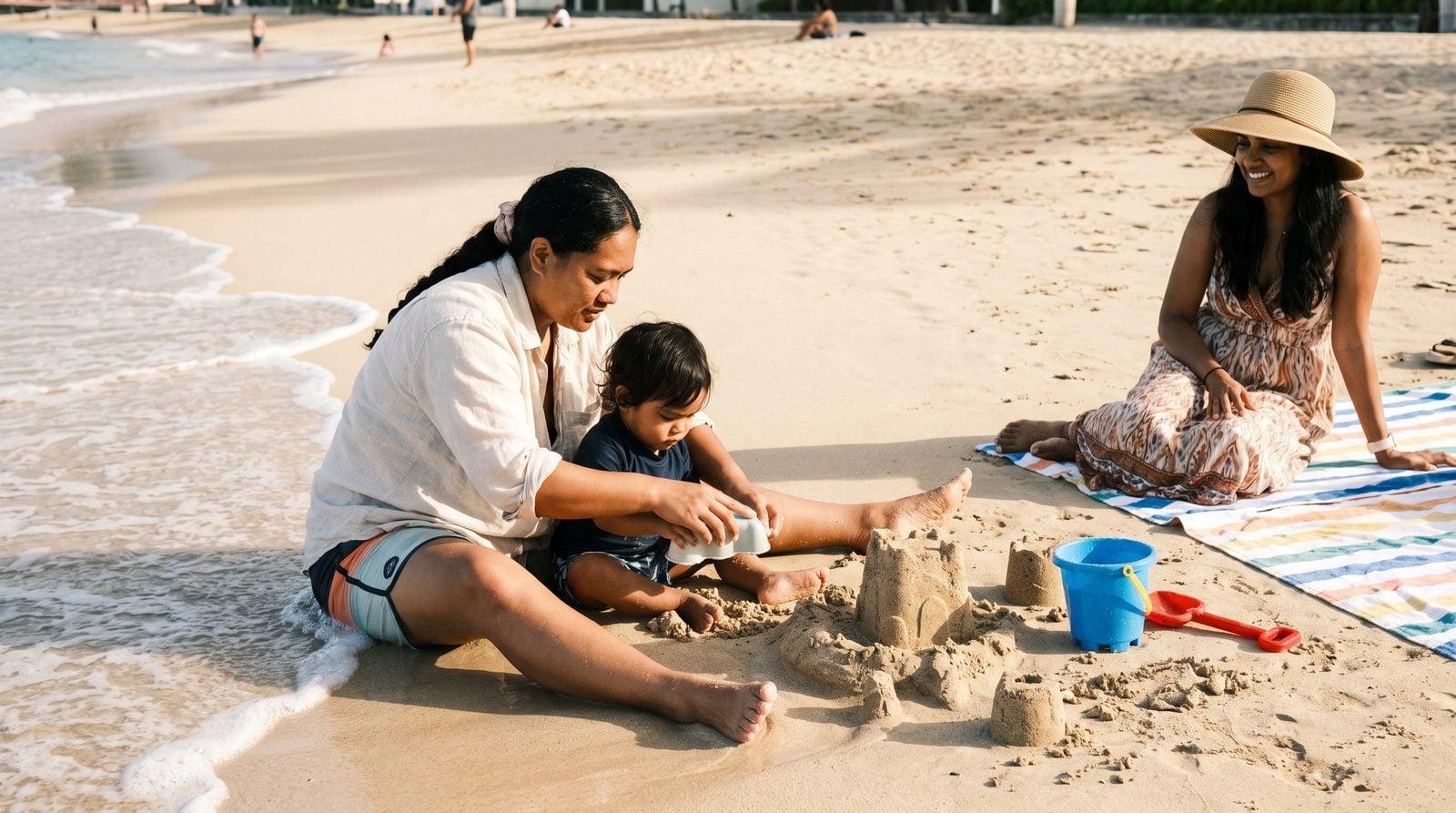
Skip ocean entry if the shoreline feels too pushy, if your toddler wants nothing to do with the water or if you cannot relax enough to enjoy it. Sand play still gives your child what they often wanted in the first place: texture, freedom, digging, carrying, pouring and proximity to the ocean without the part that feels scary. In many cases, toddlers become more comfortable simply by watching the water from a few yards back, then approaching later on their own terms.
What a Good Morning Routine Actually Looks Like
A good Waikīkī beach morning with a toddler is not "beach all day." It is a good beach morning — and that usually means two to two-and-a-half hours, maximum.
Arrive between 7:30am and 8:30am if you can. Arriving before 9am lets you claim shade and calm water before the day's heat and crowds build. Bring a small bucket and shovel — the packed wet sand near the tideline is ideal for sandcastles — and choose a spot close enough to the waterline that switching from wading to sand play feels natural rather than a dramatic retreat.
Keep your setup simple: one towel, one shade source, one bag with nappies, wipes, a spare outfit and snacks. The faster you can pack up and leave when the mood shifts, the better. Toddlers are often hesitant at first, but the shallow drop-off in combination with the breakwater makes the beach super safe, and eventually most warm up to it. When they have had enough, take them to get cleaned up, find lunch and go back to the apartment to nap.
That rhythm — early start, modest goal, clean exit — is what makes the morning work. You are not trying to maximise beach time. You are trying to leave at the right moment, which is almost always earlier than you think.
[[image:2]]
How a Local Nanny Helps Here
Early mornings with toddlers mean early wake-ups, quick breakfasts and the kind of logistics that can feel overwhelming when you are also trying to organise sun cream, beach gear and snacks. A local nanny through The Travel Nanny can help with that morning rhythm — preparing a simple breakfast, packing the beach bag, managing the walk to the sand and staying present during water play so you can relax enough to enjoy it. Nannies familiar with Waikīkī know which stretches feel calmer, how to read the shoreline and when to suggest switching to sand play before the outing tips into frustration.

When to Leave and What to Do Next
Leave before anyone gets overtired, sunburnt or hungry. That usually means departing by 10am or 10:30am at the latest. If your toddler starts rubbing their eyes, asking to go back, refusing snacks or becoming clingy, those are exit signals — not problems to solve on the beach.
Once you leave, the rest of the morning is about protecting the win. Head back to your accommodation, rinse off the sand, offer a light lunch and let your toddler nap in a cool, dark room. Midday is better used for getting out of the heat, eating lunch, washing off sand and protecting nap time.
If you try to push through and stay at the beach longer, you are not gaining time — you are borrowing it from the rest of the day, and you will pay it back in tears, tantrums and a child who cannot settle for their nap. The families who enjoy Waikīkī most are the ones who leave early, rest well and feel ready for a gentle late-afternoon outing if the mood allows.
[[image:3]]
Early Morning Waikīkī Checklist
- Arrive at the beach between 7:30am and 8:30am
- Choose Kūhiō Beach for the calmest enclosure or Duke's Beach for more flexibility
- Look for the lifeguard tower before unpacking
- Watch the shoreline for at least three minutes before your toddler enters the water
- Bring a bucket, shovel, one towel, shade, nappies, wipes and snacks
- Set up close to the tideline so switching to sand play feels natural
- Plan to leave by 10am or 10:30am, before anyone gets overtired
- Skip ocean entry if the water feels too pushy or your toddler seems hesitant
- Head back to your accommodation for a rinse, light lunch and protected nap time
- Keep the goal narrow: a good beach morning, not beach all day