



tokyo
本文目前仅提供英文版。
But is it right for toddlers? The short answer: it depends entirely on your child. Some two- and three-year-olds adore it. Others find the darkness, the squishy floors and the water overwhelming. This guide covers what toddlers actually experience, what can go wrong and how to prepare so you can make the call.
What toddlers actually do at TeamLab Planets
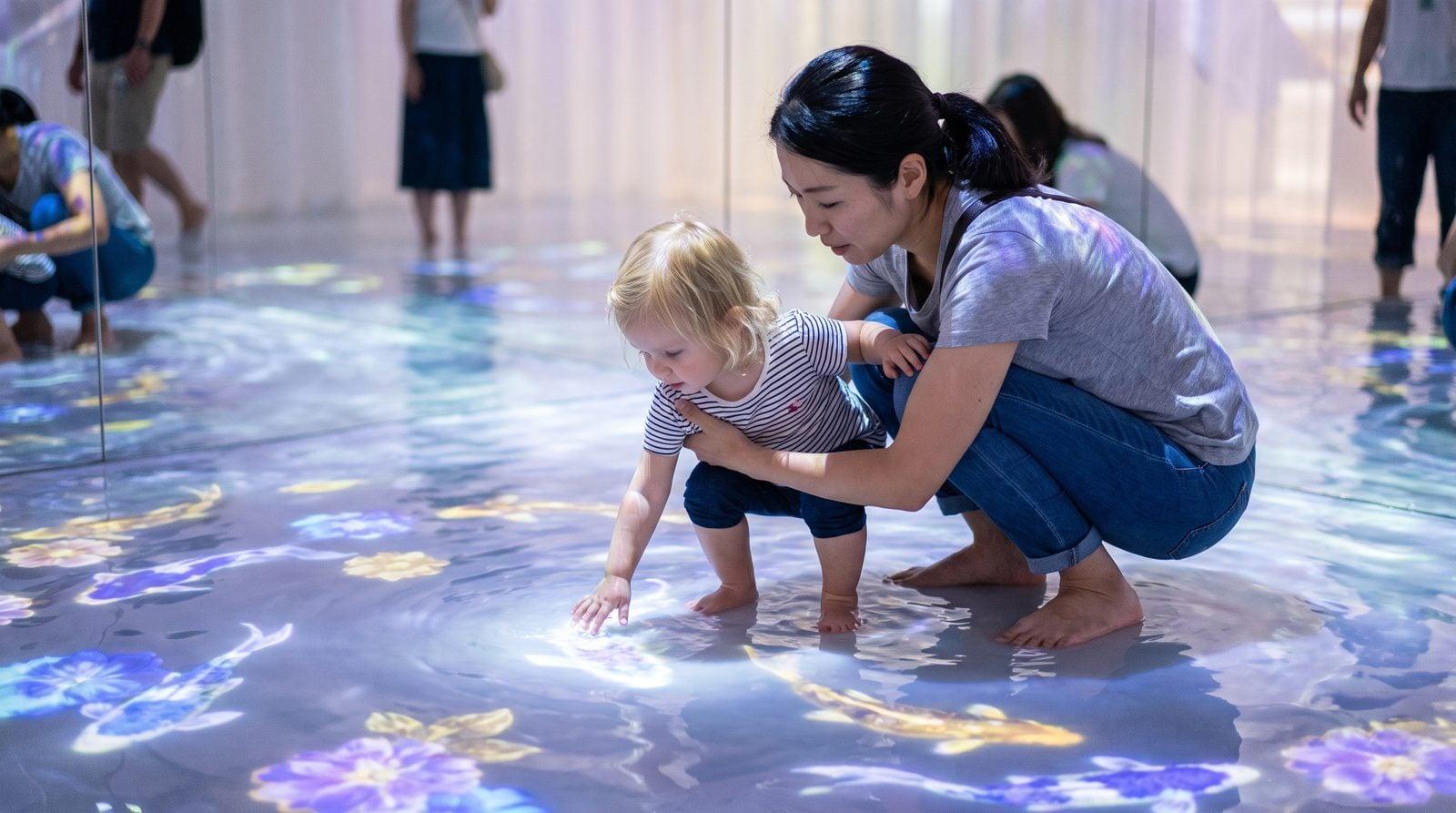
You stash everything but your phone in 100-yen coin lockers, take off your shoes and socks and walk barefoot through a shallow, glowing stream. Then you climb a slope with a waterfall of light and enter the main hall, "Drawing on the Water Surface Created by the Dance of Koi and People", where the water sits roughly 30 cm deep. Digital koi glide across the surface and scatter into flower petals when they brush your legs.
The water is warm and the museum is entirely indoors, so this is a year-round experience. Towels are provided free after each wet section, and half-pants in sizes XS to 6L can be borrowed at no charge (though no child sizes exist). Kids consistently get soaked well above the knee, and a shorter child can end up wet to the waist or higher. Staff will not let a wet child continue into the final rooms until they change at the locker room, and there is no shortcut back.
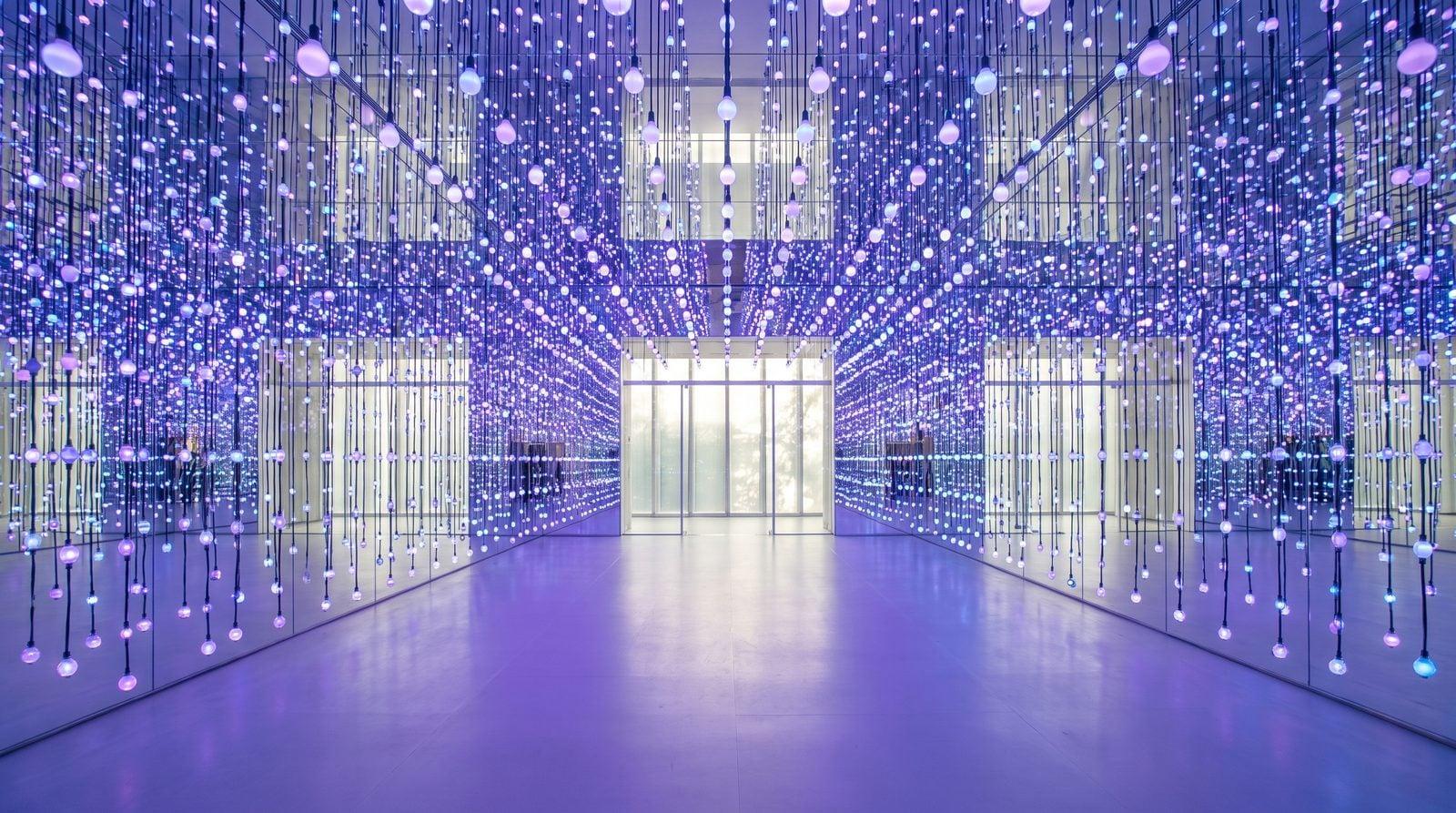
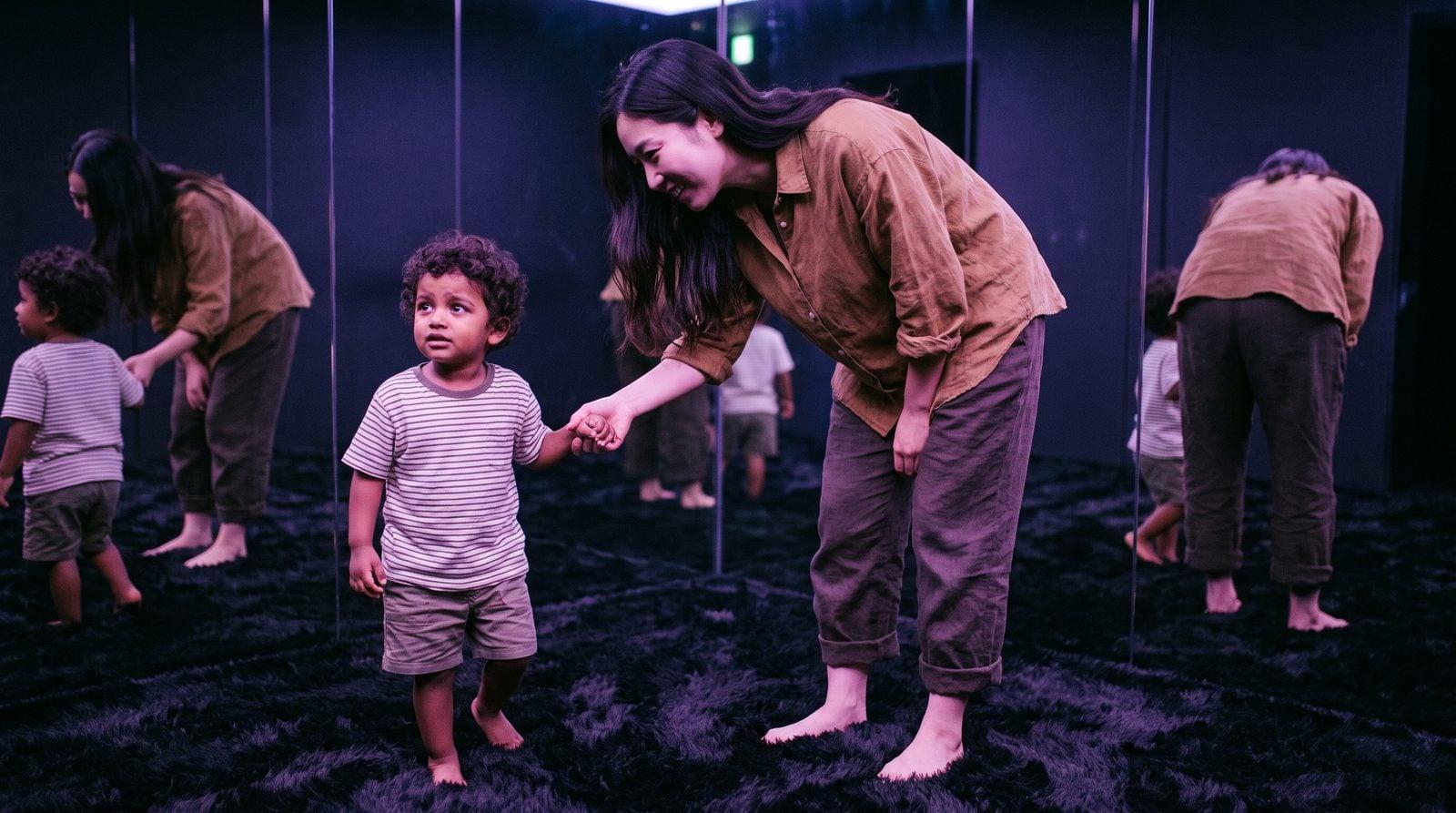
Beyond the water are the signature light rooms. The first, Soft Black Hole, is a dark room with a soft, sinking floor that some toddlers find unsettling—you can ask staff for a detour if anyone would rather skip it. The Infinite Crystal Universe hangs tens of thousands of LEDs in mirrored space, and the final room is a projection space where you lie on the floor and take in patterns and music.
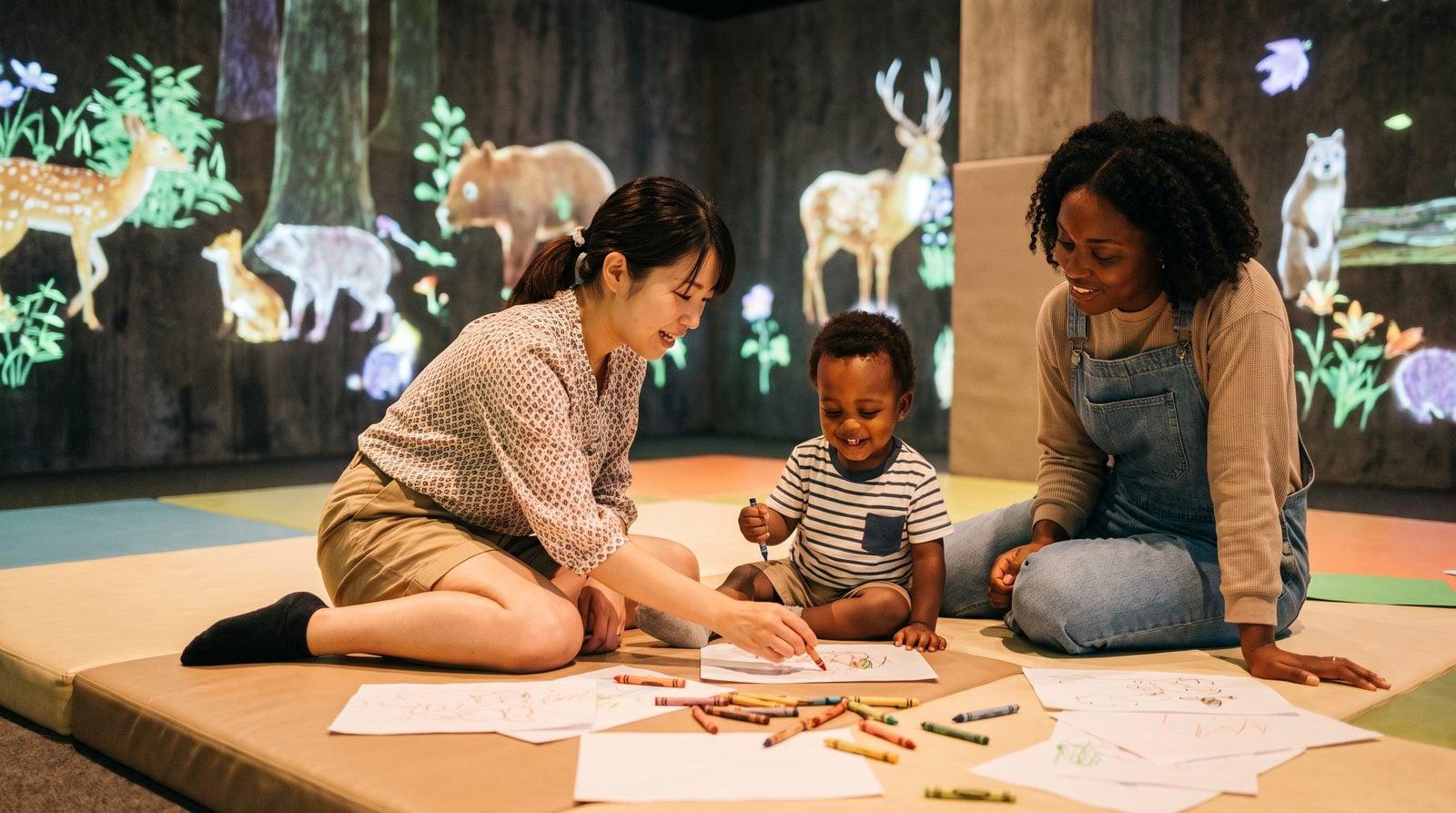
The Forest, added in January 2025, is the physical, kid-driven half. Children climb wobbly glowing staircases, bounce across mushroom-shaped platforms, ride slides and jump on trampolines, all inside projected art. A drawing corner lets kids colour an outline, scan it and watch their creature appear on the walls—you can have the drawing printed onto a towel handkerchief for about ¥1,500, ready in roughly 20 minutes. This section is far more hands-on and geared towards children than the water and light rooms.
[[image:1]]
The bits that challenge toddlers
Several aspects of TeamLab Planets can overwhelm very young children, and it's worth thinking through each one before you book.
The water depth. At 30 cm, the water reaches mid-thigh or higher on most toddlers. Some love it. Others panic. You cannot carry a child through the water rooms—they must walk—and there is no way to skip them. If your toddler dislikes paddling pools or gets anxious in water, this may not be the right outing.
The darkness. Multiple rooms are very dark, and the Soft Black Hole has a sinking floor that feels disorienting even to adults. Toddlers who are afraid of the dark or need constant visual reassurance may struggle.
The crowds. Even with timed tickets, queues to enter and to get into the most famous exhibits can be long. The waiting area in summer can get very hot, so bring a fan, cold drinks or a hat.
The mirrored floors. Several rooms reflect straight up, which can be disorienting for toddlers (and means adults should avoid skirts unless wearing shorts underneath).
No strollers. Strollers cannot enter the exhibition. Babies ride in a carrier, and toddlers walk the entire route barefoot. If your child tires easily or refuses to walk for more than ten minutes, this will be difficult.
[[image:2]]
What to wear and what to bring
Comfortable shorts or trousers you can easily roll up are essential. In the koi pond area, water reaches roughly knee height on adults, so you'll want to keep clothing out of the water. The flooring has a soft, rubber-like surface and is not slippery.
Easy-to-remove shoes are also critical. You'll be barefoot for certain parts but will need shoes for other areas—easy slip-on trainers are perfect. Avoid lace-ups.
Bring a full change of clothes including a shirt. Wet children cannot proceed until they change at the locker room. Pack the spare clothes in the locker so you can access them immediately if asked.
Bring spare socks. Even if your toddler stays relatively dry, feet will get wet, and damp socks are miserable.
Pack light. All items must be stored in lockers, and you'll only carry your phone through the exhibition. Strollers are parked at the entrance.
Tickets, timing and practical details
Pricing varies by age, visit date and entry time. Weekends and peak periods are more expensive, while the lowest-priced tickets are often available later in the day, closer to closing time. Adults (18+) pay roughly ¥3,600–4,600, children (4–12) around ¥1,500, and children under three are free (though you must still register them for a ticket, and there must be one accompanying adult for every three children).
Book the earliest slot you can manage. The 9:00 AM entry has the shortest wait, and the inside of the facility is relatively less crowded. Popular slots sell out a month ahead, and entrance queues can run 20–30 minutes even with a timed ticket.
Entry times are scheduled, but there is no time limit once you're inside. You're free to explore at your own pace. Plan for 1 hour for toddlers, 1.5 to 2 hours for school-age children. If a room seems too crowded or overwhelming, it's fine to skip it.
Some sections, like the water exhibits, follow a set one-way route, so you don't need to worry about missing anything or getting lost. You'll naturally pass through every room as you go.
Check the official teamLab Planets website for current opening hours, ticket availability and any temporary closures.
How a local nanny helps here
A local nanny who knows TeamLab Planets can meet you at the entrance, help wrangle a toddler through the water rooms, carry spare clothes and manage the locker situation while you focus on the experience. They'll know which rooms to skip if your child is struggling, how to time the visit to avoid the worst crowds and where to change a wet toddler quickly. The Travel Nanny matches families with vetted local nannies in Tokyo who are familiar with the city's indoor attractions and can make outings like this far less stressful.
[[image:3]]
Toddler-ready checklist
- Book the 9:00 AM entry slot at least four weeks ahead
- Pack a full change of clothes (including shirt) in the locker
- Bring spare socks and easy slip-on shoes
- Dress toddler in shorts or trousers that roll up easily
- Bring a baby carrier if your child is under two
- Check your child is comfortable with water, darkness and crowds
- Download the teamLab app before you arrive
- Bring a fan or hat if visiting in summer
- Plan for 1 to 1.5 hours total
- Accept that you may need to skip rooms or leave early